

First time in Slovenia
Climate Cafés - Monthly Meetings
Climate Café® Ljubljana
Climate Cafés are informal, open meetings designed for safe and respectful discussion about the personal, social and ethical aspects of the climate crisis. They are a space where participants can share their feelings, thoughts and experiences of living in a time of climate change without pressure, expectations or the need for professional knowledge.
The concept comes from the international Climate Café® network, which has the motto “drink – chat – act” – conversations take place in an informal setting with the aim of exchanging experiences, impressions and connections.
Climate Cafés Ljubljana thus continue the tradition of the global Climate Café® community, which creates spaces for reflection and exchange of experiences on dealing with climate change around the world. It is a response to the realization that the climate crisis is not only a technical, social or institutional issue, but also a deeply individual human experience, imbued with feelings of anxiety, loss, responsibility, guilt, but also hope and solidarity. In a safe environment, emotions such as concern, anger, and doubt can be freely expressed, accepted, and addressed within the group.
The meetings are intended to strengthen the community of all those affected in any way by the climate crisis – all experts, activists, students, retirees, citizens, parents, teachers, entrepreneurs, and individuals who can’t find themselves anywhere else are invited!
What topics do we cover?
Psychological and emotional responses to the climate crisis
- ecological anxiety and worry about the future
- feelings of being overwhelmed, helpless, or apathetic
- ecological guilt: “am I doing enough?”
- emotional regulation in times of environmental change
Interpersonal relations and communication
- dealing with those who think differently
- conflict, polarization and debate fatigue
- communicating with family, partners or children about the future
Ethics of everyday life in times of crisis
- the question of parenting: “having a child in these times?”
- the moral dilemmas of everyday decisions
- how to decide between individual and collective responsibilities
- fatigue with “sustainability rules”
Community, belonging and a sense of meaning
- how to find motivation and meaning in the face of negative predictions
- feeling lonely in caring for the environment
- how to build supportive communities
Social and cultural framework
- conspiracy theories and their psychological context
- distrust in institutions, science and politics
- media overload and “doomscrolling”
- cultural imaginaries, stories about the future, narratives of hope or catastrophe
A space for personal stories
- What does nature mean to me
- How do I experience the future
- What inspires me, what blocks me

Ana Hafner
Ana holds a degree in philosophy and a master’s degree in sustainable development management. Her research focuses on ecological anxiety and questions concerning the relationship between humans, nature, and society. She works at the Institute of Ecology, where she is involved in political ecology and the social-science dimensions of sustainable development.
How does a climate café unfold?
- meetings take place every second Wednesday of the month at 7:30 p.m.
- location: Info point Misija 100, Pogačarjev trg 3, Ljubljana
- meetings are led by moderators who ensure the safety and respect of the discussions
- guests from relevant fields join
- the discussion is focused, but open: participants share as much as they want
tea, coffee and an - informal atmosphere is part of the concept
- registration is mandatory (write to info@ipres.si)
Meetings in 2026 so far (reports below):
January 2026: 14. 1. 2026
February 2026: 11. 2. 2026
March 2026: 11. 3. 2026
April 2026: 8. 4. 2026
May 2026: 13. 5. 2026
June 2026: 10. 6. 2026
If you want to be informed about events, sign up for the newsletter below:
Social networks
Join the exchanges on social media as well – groups have been established on Facebook and Linkedin, designed to connect participants, share information about meetings and events, and continue the conversations that are opened at climate cafes. You are invited to join via the links below:

Barbara Simonič
Barbara Simonič is a Slovenian expert in climate policy and system innovation with more than 15 years of experience at the national, European and international levels. At the Ministry, she co-designed key climate policies, especially in the field of transport and climate change adaptation, led the Climate Fund and represented Slovenia at the UNFCCC, the European Commission, the OECD and the EEA. Later at the EIT Climate-KIC and today as the director of Klimalab and founder of the Institute for Climate Solutions (IPRES), she develops and implements breakthrough projects for the transition to a low-carbon and climate-resilient society. She holds a university degree in political science in international relations, completed a master’s degree in European studies at the College of Europe in Bruges, Belgium, and is currently completing an interdisciplinary doctoral study in Environmental Protection at the University of Ljubljana.
VI. Climate Café Ljubljana: Maladaptive adaptation
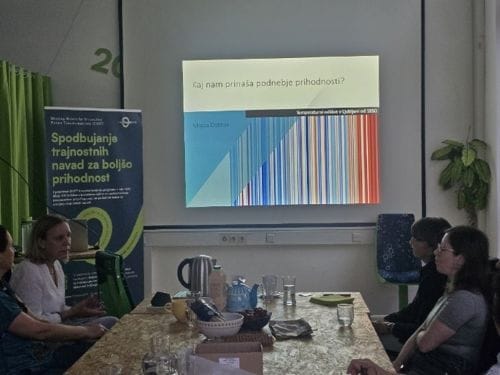
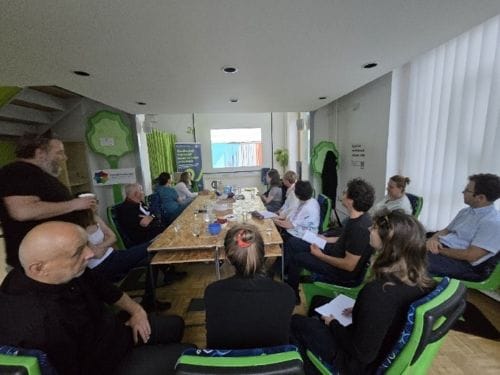
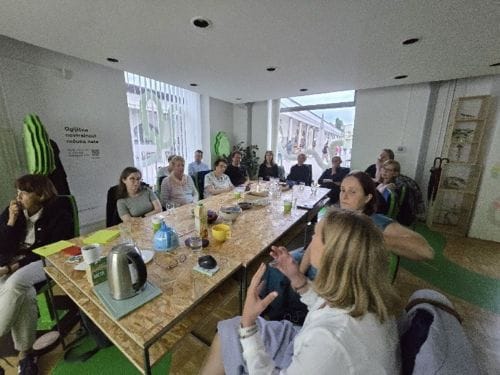
This Climate Café, the sixth in a row, was dedicated to climate change adaptation. On the eve of a severe storm on 10 June 2026, which destroyed a significant part of the Komenda settlement and crops in the Drava-Ptuj valley, 17 participants discussed the challenges and solutions for more successful climate change adaptation until late in the evening after introductory presentations.
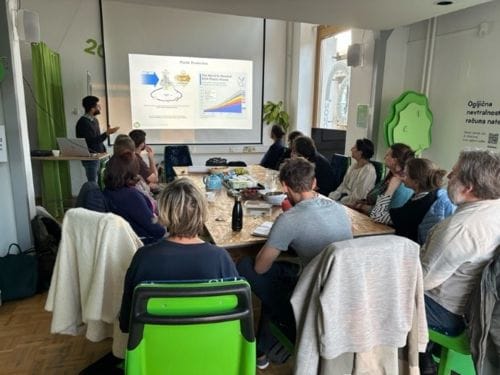
The introductory presentation by Mag. Mojca Dolinar exposed the key climate changes that we are already experiencing in Slovenia today, and their expected impacts in the future. Climate change is no longer a distant scenario, but a reality of the present – the temperature in Slovenia has increased by approximately 2.6 °C in the last 60 years, and the warming trend continues.
The effects of heat waves, an increase in the number of hot days and increased heat stress on the population are particularly pronounced. The changes will affect human health, mainly due to heat, ozone pollution and the spread of diseases. The risks of vector-borne diseases and food security problems are also increasing. The presentation also drew attention to changes in the precipitation regime. More extreme weather events are expected, especially heavier downpours, storms, wind gusts and hail. As a result, the likelihood of floods and droughts will increase, and river regimes and groundwater recharge will also change.
An important part of the presentation was devoted to the impacts on individual sectors:
- in agriculture and forestry, drought, heat stress, pests and diseases will be a greater problem;
- in construction, materials, energy efficiency of buildings and drainage systems will have to be adjusted;
- the energy sector will face changes in energy consumption and hydrological regimes;
- and tourism will face a decrease in snow cover and greater pressure on water resources.
The key message of the presentation was that adaptation to climate change, reduction of greenhouse gas emissions and timely action are essential.
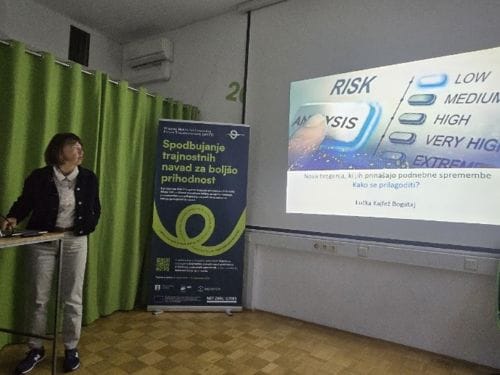
A presentation by Dr. Lučka Kajfež Bogataj followed, observing climate change primarily from the perspective of security, geopolitics and social risks. The key message of the lecture was that climate change is no longer just an environmental problem, but is becoming one of the central factors of political, social and economic instability in the world.
The lecture highlighted that climate change is creating new physical, political, economic, social and legal risks. These include conflicts over water and food, migration, growing inequality, organised crime and weakening national security. According to the IPCC, climate change contributes to a greater risk of conflict, while conflicts further increase climate risks. In the future, these connections will become increasingly complex.
Changes are also occurring in the global geopolitical space. The melting of the Arctic ice is already causing new international tensions over access to trade routes, oil, gas and minerals. Climate change is also affecting national borders – melting glaciers, changing river flows and rising sea levels are changing the legal and physical concepts of borders between countries. Examples include the demarcation of new borders between Italy and Switzerland below the Matterhorn and disputes over the border on the Danube between Croatia and Serbia.
Societies with weakened institutions and poor governance are particularly vulnerable to destabilization due to climate impacts. Disinformation and conspiracy theories are also particularly problematic, and they are already undermining public trust in science and climate policies. The key message of the presentation was that climate change poses a systemic risk to modern societies that goes beyond the environment. Therefore, successful adaptation will require significantly better governance, international cooperation, strengthening the resilience of societies and the integration of climate risks into all levels of decision-making.
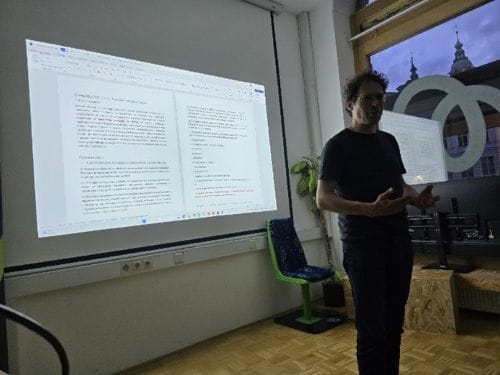
Presentation by Dr. Janez Berdavs focused on the new climate law and the challenges of its implementation in the field of climate change adaptation in Slovenia. The lecture emphasized that adaptation is becoming as important as reducing greenhouse gas emissions, as the consequences of climate change are already present and will intensify in the future.
A comparison with the European climate law also shows differences in the approach to adaptation. While the Slovenian law foresees the preparation of regional adaptation action plans, the European one calls for the development of national adaptation plans. However, in Slovenia, development regions lack the institutional and other capacities to coordinate interests between the state and municipalities and to involve the public and relevant actors in the preparation of plans. Thus, a major challenge remains the management and coordination between different levels of government and sectors. One of the problems in adaptation is also the independence of sectors in preparing sectoral vulnerability assessments, which are not comparable to each other, the fragmentation of competences and the lack of measures at the local level.
The lecture also presented the role of the Climate Fund as a key financial mechanism for the implementation of mitigation and adaptation measures. The Climate Fund is intended to enable the financing and co-financing of measures to reduce emissions and adapt to the consequences of climate change. The question of whether financial resources and institutional capacities will be sufficient to actually implement the ambitious goals of the law was raised.
The key message of the presentation was that Slovenia needs a more systematic, coordinated and long-term approach to adapting to climate change. Climate resilience must become an integral part of climate policy at the national level. In addition to legislation, the successful implementation of the Climate Act will also require adequate financing, strengthened institutions and the active participation of municipalities, the professional community and residents.
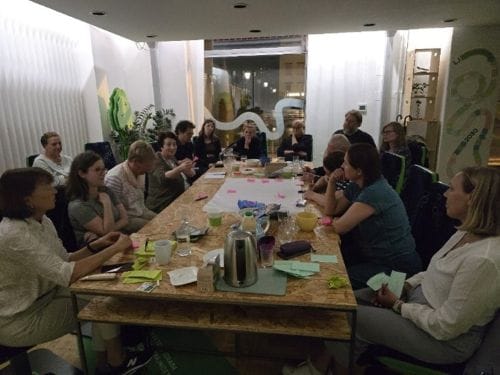
In the final part, the participants jointly identified key challenges and opportunities in the field of climate change adaptation.
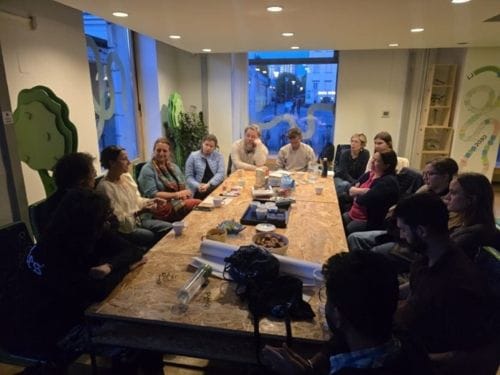
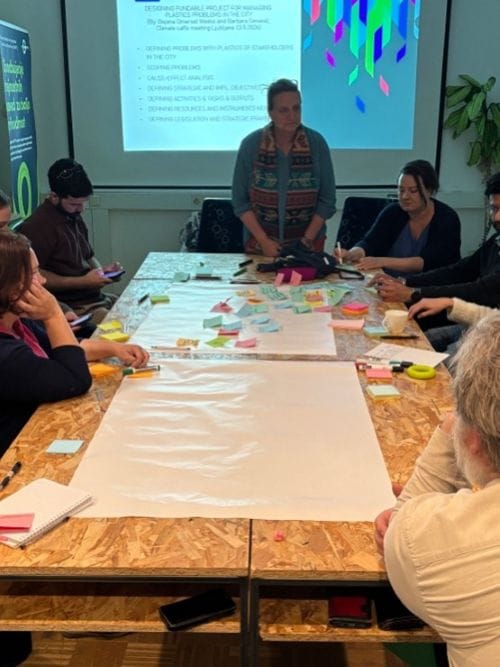
V. Climate Café Ljubljana: Unpacking Plastic
This month’s Climate café was dedicated to the issue of plastic. The event, titled Unpacking, Plastic opened up one of the most widespread and visible environmental issues of modern times: plastics, their ubiquity, their impacts on the environment and health, and the political and practical options for action.
The first part of the meeting provided an expert insight into the issue. Dr. Vaibhav Budhiraja, a researcher at the Institute of Chemistry, prepared an extensive presentation on different types of plastic, microplastics, their prevalence and impacts, and current research in this area. The issue of microplastics, which is present practically everywhere today: in ecosystems, water, food chains, and even in the human body, stood out in particular. The discussion also repeatedly highlighted the problem of lack of industrial transparency, as companies are not obliged to disclose all the ingredients and additives they use in the production of plastic materials.
Janja Kreitmayer McKenzie, Slovenia’s chief negotiator, followed with the presentation of the political dimension of the plastics issue. She briefed the participants on developments in international negotiations for a new globally binding agreement to limit plastic pollution. She stressed that despite growing awareness of its negative impacts, plastic production is still increasing sharply, which further exacerbates the need for an international response. She also presented the background to the negotiations, the key challenges and differences between countries, and the importance of the possible adoption of an agreement that could represent one of the most important international environmental agreements after the Paris Agreement.
The second part of the meeting was designed as a workshop. It was led by Bojana Omersel. Weeks , a circular economy expert, focused the discussion on the specific problems with plastics in Ljubljana. Participants first identified the challenges they perceived in their local environment, and then together looked for their causes, possible solutions and strategies for action. The discussion thus moved from a general understanding of the problem to a more concrete question of what can be done about plastics in the city.
The meeting brought together scientific, political and practical perspectives on plastics. It was confirmed that the problem of plastics goes beyond waste management. Solving it cannot be based solely on individual responsibility, but also requires changes at the level of production, regulation, transparency and broader systemic arrangements.
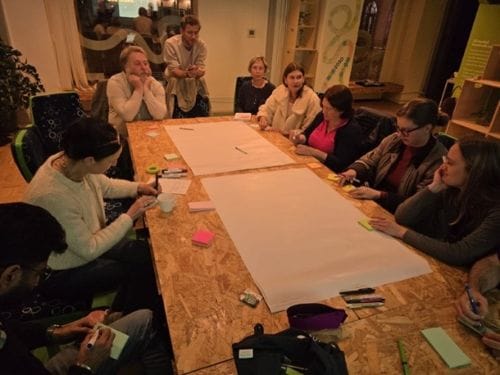
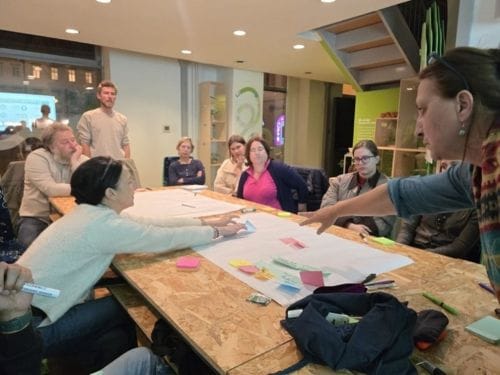
IV. Climate Café Ljubljana: Eco Fund as a starting point for reflection on concrete options for action with Youth for Climate Justice
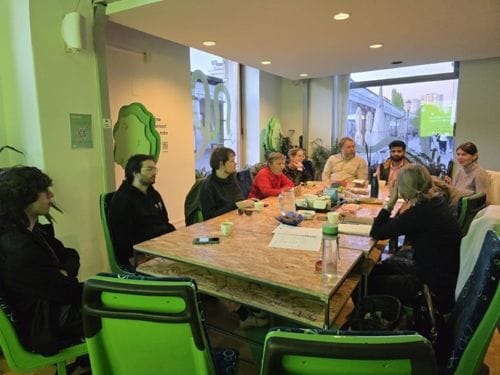
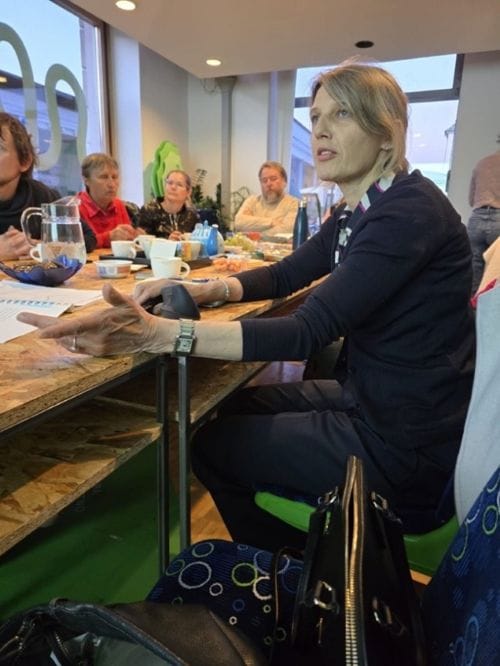
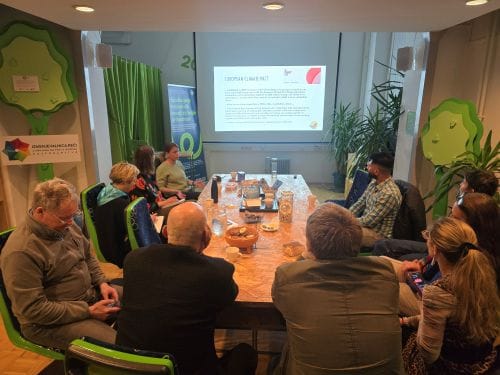
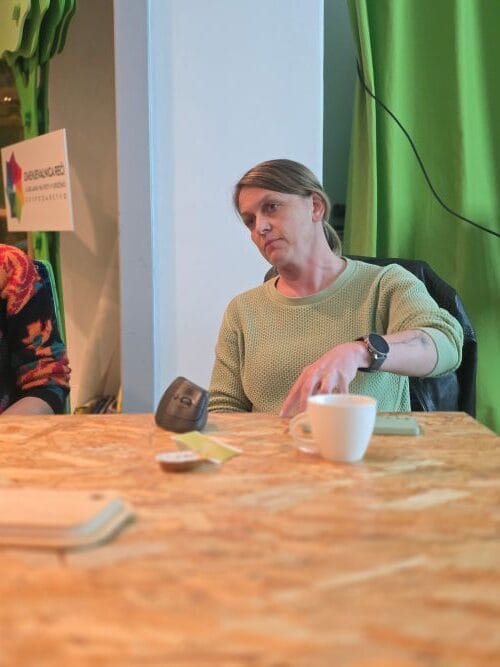
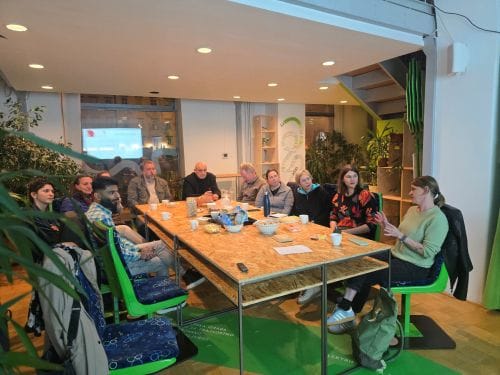
The fourth meeting of the Climate Café in Ljubljana took place as usual – the second Wednesday of the month, April 8, starting at 7:30 PM in the premises of the Info Point Misija 100 at Pogačarjev trg 3. There were 12 participants, including one who does not speak Slovenian, so we had the debate partly in English. The meeting was intended for an open discussion about the climate crisis, options for action and ways to move from concern to joint action. In addition to the open debate and presentation, this time the goal was also to prepare and discuss a set of measures that civil society can propose as priority climate measures for the new government.
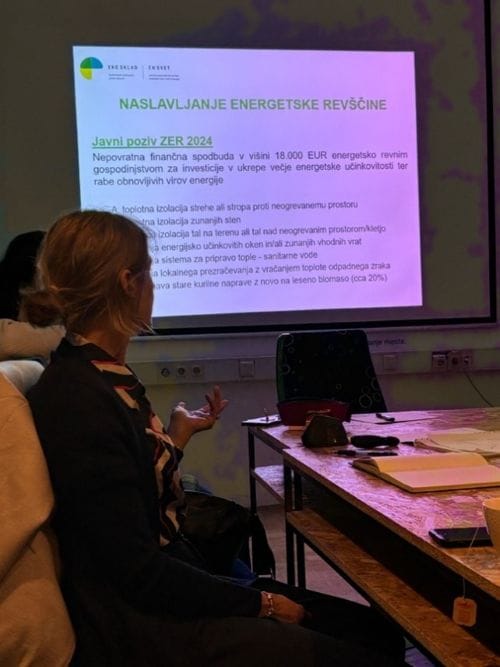
The meeting began with the introduction of all participants, as there are always some new and some familiar participants, and continued with the presentation of mag. Mojca Vendramin, director of the Eco Fund, who gave a very comprehensive presentation of the Fund’s operations, its development over time, and the breadth of areas it covers. The focus of the debate was primarily on the scope and purposes of financing, the role of the ENSVET advisory network, the visibility of the Eco Fund in the public (according to surveys, only 20% of people know the ENSVET advisors financed by the Eco Fund!) and some of the limitations and challenges the Fund faces in its operations, such as the capacity of the Eco Fund, the quality of advice from advisors, and the necessary increase in the number of comprehensive renovations. More in the presentation.
The evening then developed into an engaged discussion, in which we, together with members of the Youth for Climate Justice organization, also opened up some ideas for action, especially in the areas of human behavior, energy, and mobility. Those present agreed that it is crucial to strengthen the areas of awareness, education and information, as well as the actions of the state and local level (especially the poor public transport system, and the influence of lobbies and industry), while there was no agreement among the participants in the area of technologies such as JEK. Since the time quickly passed into the late hours during a good conversation, we ran out of time and were unable to prepare a list of measures that all participants would agree on. We would be happy to take even more time to develop concrete measures in more depth.
III. Climate Café in Ljubljana: A joint reflection on climate engagement
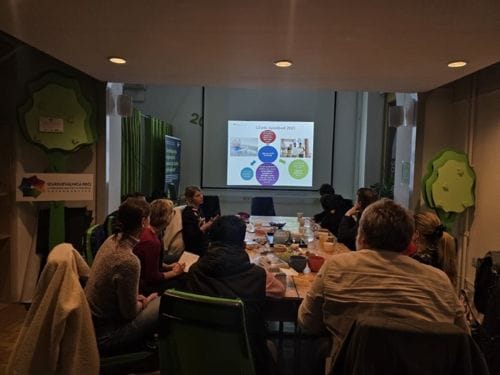
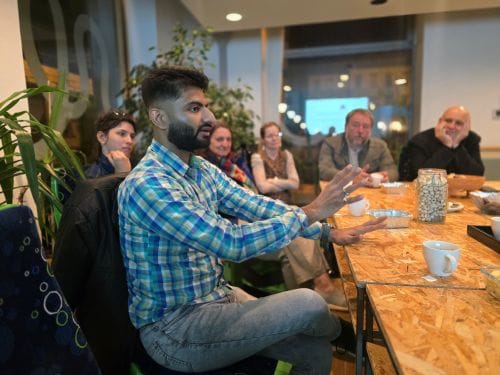
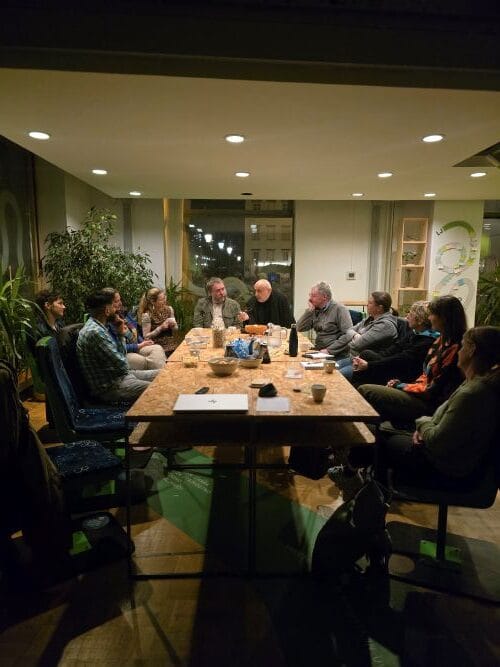
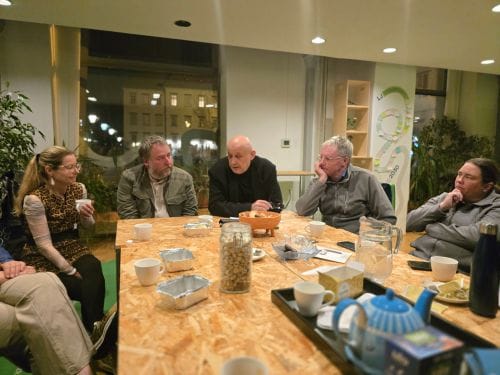
The third Climate Café in Ljubljana took place on Wednesday, 11 March 2026, this time as part of the Climate Action Days initiative, a pan-European campaign to promote climate action through local events and initiatives. The evening took place in a pleasant and relaxed atmosphere, with 12 participants discussing together. Once again, the meeting was intended for an open discussion about the climate crisis, options for action and ways to move from concern to joint action.
The first part of the evening was opened by EU Climate Ambassador Katarina Trstenjak, who presented the work of European Climate Ambassadors and various options for getting involved in their activities. She spoke about what the role of ambassadors entails, how they are organised and who are the Slovenian ambassadors who are already actively contributing in this area. Her presentation was encouraging and concrete, as it showed that climate action is not something complex, but something that can be approached through smaller, accessible steps. The history since the beginning of the EU Climate Pact was also interesting, as at the beginning the EU Climate Ambassador was also Dr. Robert Golob, the current Prime Minister.
Dr. Andrej Lukšič then spoke about the question of what actually motivates people to act on climate change. He focused on what was the key factor for Greta’s success, how to persuade individuals to be touched by the topic, and how to create such ways of communication that do not remain only at the information level, but can also encourage engagement. His contribution opened the important question of how to move from climate concern to a response that is more active and communal.
After both introductory contributions, the discussion developed spontaneously in a relaxed atmosphere. The participants were eloquent, full of questions and various cues for further debate, so the evening quickly took the form of a truly open exchange of opinions. There was a feeling that more familiarity and trust were gradually being established between people, which gave the meetings a special tone and allowed professional topics to be intertwined with personal reflections, doubts and ideas for action. The beginnings of joint action are also evident in the contributions of individuals, as everyone brings something to snack on, and we are especially happy about new flavors (Makhana – fox nuts) and homemade delicacies! 😊
II. Climate Café in Ljubljana: From expert views to collective reflection
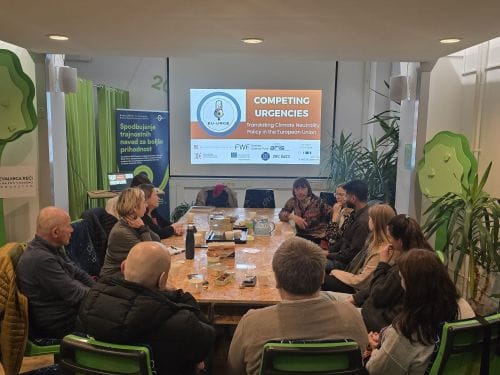
The second Climate Café in Ljubljana took place on Wednesday, February 11, 2026, at the Misija 100 Info Point at Pogačarjev trg 3. A total of 13 participants met, of which 3 were English speakers, so the meeting was held in English. The meeting continued a series of informal, open conversations about the personal, social and ethical dimensions of the climate crisis, which are taking place within the framework of the international Climate Café® network. The purpose of the meetings remains to create a safe and inclusive space for dialogue, exchange of experiences and collective reflection on dealing with climate change.
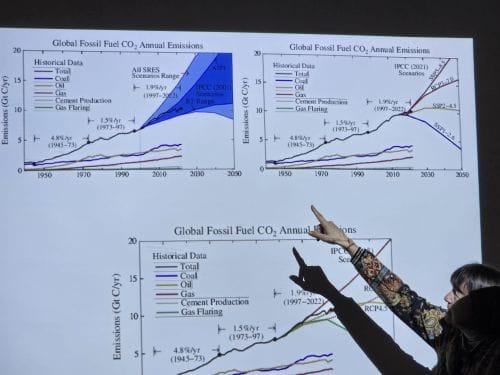
This meeting was designed as a combination of presentations and open discussion. The guest of the evening, prof. dr. Lučka Kajfež Bogataj, spoke about her many years of experience working in the field of climate change and pointed out that the findings of scientists from decades ago coincide with the warming we are witnessing today. Along with the strengthened warnings about exceeding the safe limit, the understanding of the climate crisis has also changed in recent decades. She placed special emphasis on placing climate challenges in the broader context of simultaneous environmental, social and political crises and on the question of how these intertwined uncertainties affect individuals and society.
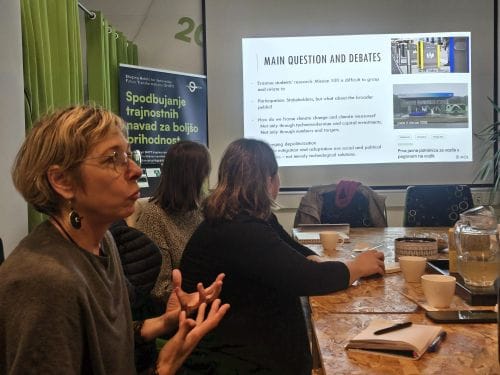
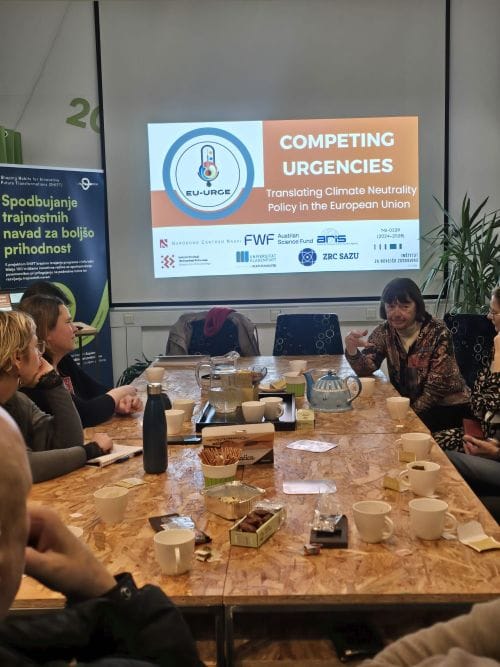
Next, Dr. Saša Poljak Istenič (ZRC SAZU) and Dr. Nina Vodopivec (INZ) presented the trilateral research project EU-URGE What is urgent? European policy of climate neutrality of cities and its local interpretations. The project focuses on Mission 100 and, from the perspective of cultural anthropology, explores how climate neutrality policies are imagined and implemented in the practice of urban governance, participation and climate justice in Ljubljana, Warsaw and Klagenfurt. The presentation raised questions about the gaps between European goals, local interpretations and concrete experiences of residents.
The central part of the meeting was an open conversation with the participants, which developed into a lively discussion on climate justice and personal and collective responses to climate change. The second Climate Café reaffirmed that there is a strong need for such meetings, which go beyond classic lecture formats and enable an equal exchange of different perspectives. The meeting ended in an atmosphere of openness and interest in continuing the discussions in the coming months.
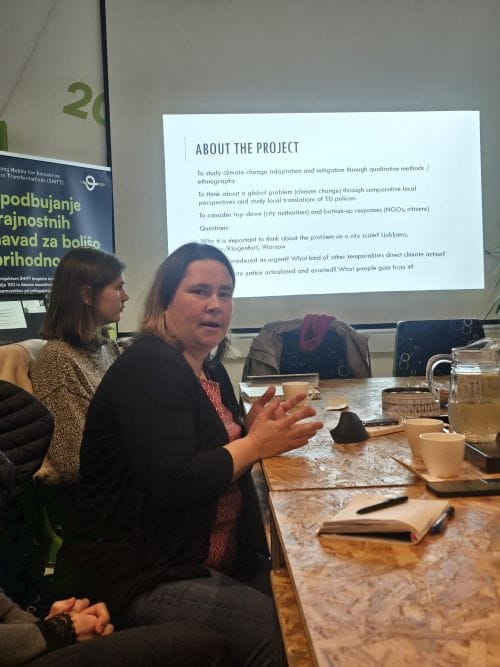
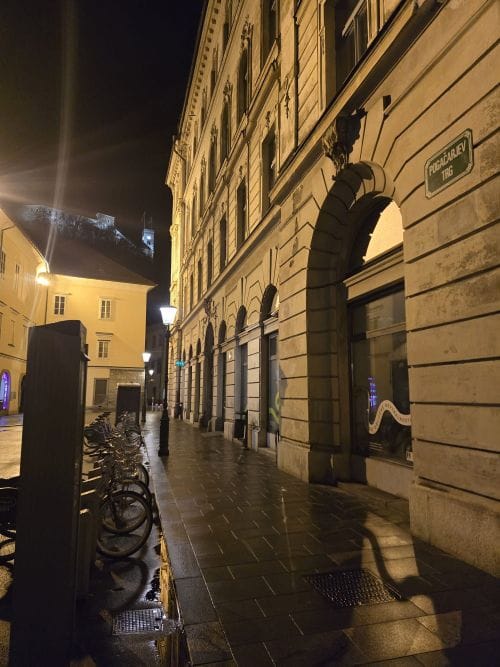


A lively start to the Climate Café series: from ecological anxiety to shared ideas...
The first meeting took place on January 14, 2026 at the Misija 100 Info Point at Pogačarjev trg 3 in Ljubljana.
It was attended by 11 participants from different fields, which created a dynamic, open and very engaged atmosphere from the very beginning. The conversation was so lively and in-depth that we only ended the meeting shortly before 10 pm.
The meeting began with a brief presentation of the purpose, goals and format of climate cafes and the introduction of the participants and moderators. It continued with a concise overview of current information in the field of climate change mitigation and adaptation, placed in the broader context of the global climate crisis and the increasingly present ecological anxiety.
The central part of the meeting was marked by an open and honest exchange of opinions, in which the participants shared their inner reactions, personal experiences, dilemmas and reflections on life, work and action in times of climate change. The discussion also touched on issues of responsibility, finding solutions, persuading others, and the need for community support and long-term action.
The meeting concluded with a shared realization that Slovenia lacks such spaces for in-depth, interdisciplinary, and intergenerational discussions on climate issues. Participants expressed interest in continuing the meetings and provided several ideas for future content and potential joint projects.


Recept za veganske čokoladne tortice: konzerva bio rdečega fižola (odcejen, 250 gr), 100 gr dateljev, 55 gr kakava, 30 gr lanenih semen, 2čž pecilnega praška, 240 ml rastlinskega mleka – zmiksaš, pečeš na 180 stopinj 40 min in preliješ s čokolado!
 Donate